

Here’s an uncomfortable truth about link building outreach: the vast majority of emails sent never get a reply. Most go unread, many get marked as spam, and a few get replied to with a polite no. If you’ve been running outreach campaigns and watching your response rate hover in the low single digits, you’re not doing anything unusual. But you can do better.
Why most outreach fails before the subject line matters
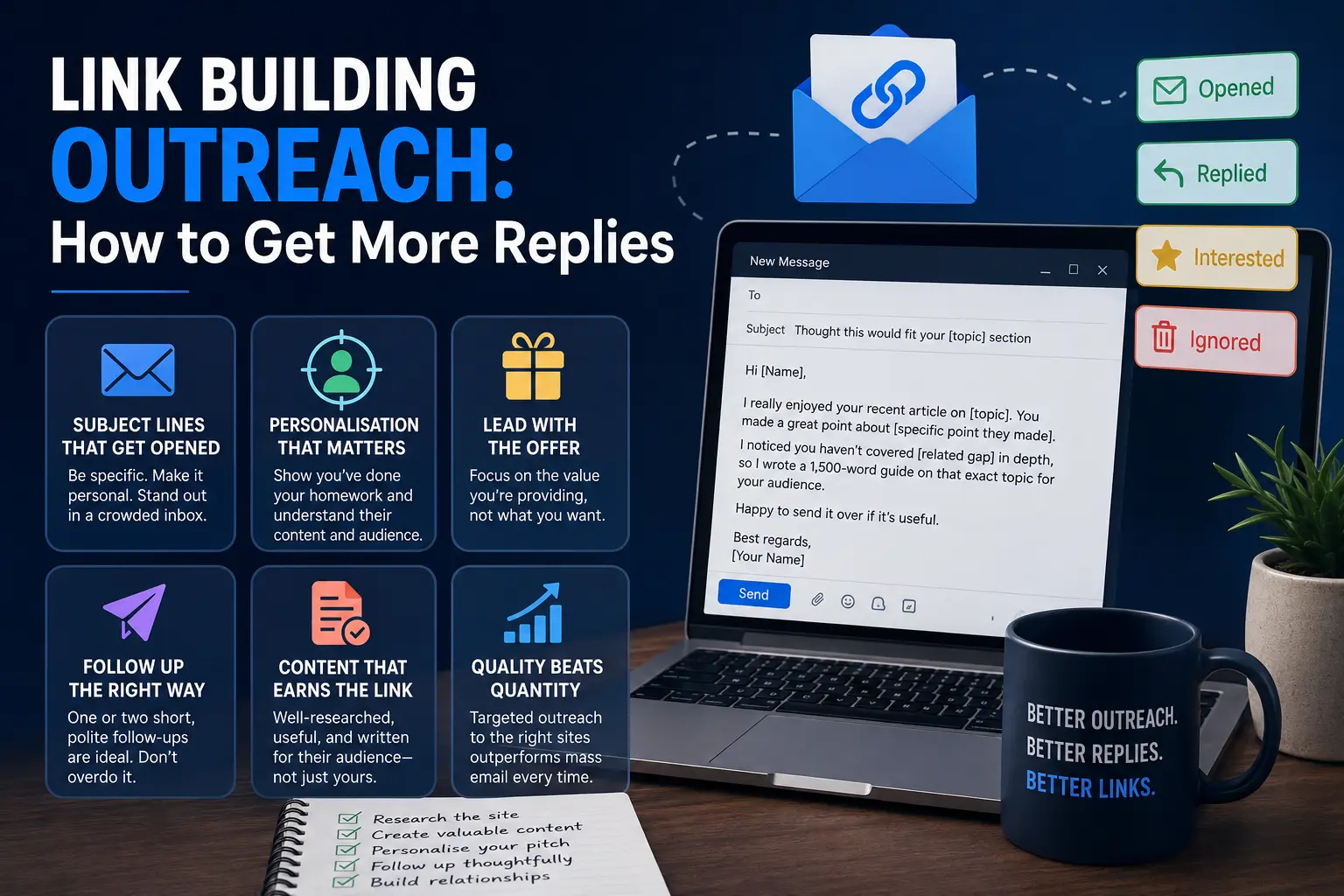
Before anyone reads your pitch, they’re making a snap judgement based on two things: who sent it and whether the subject line looks worth opening. Vague subject lines like “Quick question” or “Collaboration opportunity” have been so overused that editors filter them out on instinct. The same goes for addresses like noreply@ or a domain the recipient doesn’t recognise.
Use a real name in your “from” field and a subject line that’s specific enough to feel personal. “Thought this would fit your [topic] section” works better than “Partnership request” because it shows you’ve actually looked at the site.
Personalisation that actually means something
Lots of outreach claims to be personalised. It isn’t. Dropping in the website name or referencing a recent post title is table stakes — editors can spot a mail-merge template from 50 metres. Real personalisation means demonstrating that you’ve read their content, understood their audience, and have something that genuinely fits.
Reference a specific argument they made. Mention a gap in their existing coverage that your content addresses. Explain why their readers, specifically, would benefit. This takes more time per email, but your reply rate will reflect that investment.
Lead with the offer, not the ask
The instinct for many people is to explain who they are, what their site is, what they’d like, and then mention what they’re offering. Flip it. In the first sentence, lead with what you’re bringing to the table.
“I’ve written a 1,500-word guide on X for your audience — happy to send it over if it’s useful” lands differently from “We’re trying to build our backlink profile and wondered if you’d accept a guest post.” One is about the recipient. The other is about you. Editors say yes when they can see the value for their site immediately.
Follow-up without being annoying
One follow-up email after five to seven days is standard practice and completely acceptable. Two follow-ups, sent thoughtfully and spaced apart, won’t harm you. Three or more starts to feel like pressure, and you risk damaging a relationship before it’s started.
Keep your follow-ups short. A single line reiterating the offer and checking whether your first email landed is enough. Don’t resend the entire original email. Don’t explain that you’re “just following up” — everyone knows that’s what you’re doing.
The content underneath has to earn the link
Even a perfectly crafted outreach email won’t compensate for weak content. The piece you’re pitching needs to be something the editor would genuinely be happy to have on their site. That means well-researched, clearly written, and genuinely useful to their readers — not a thinly veiled sales pitch for your product dressed up as an article.
Before you start any outreach push, audit the asset you’re promoting. Would you link to it if you ran that site? If the honest answer is no, work on the content before sending a single email.
Volume versus quality
There’s a temptation to scale outreach aggressively — send more emails, get more links. It can work at the margins, but a reputation for spammy outreach travels. Editors talk. A targeted list of 50 well-researched prospects with genuinely personalised emails will outperform 500 generic blasts almost every time, both in response rate and in the quality of the links you earn.
Start focused. Build a reputation for respectful, valuable outreach. The volume can come later once you’ve got the formula working.
Getting outreach right takes time and the right infrastructure. LinkPilot HQ runs done-for-you link building campaigns that handle everything from prospecting to placement.