

If you’ve been doing SEO for more than five minutes, someone’s told you that backlinks matter. They’re right. But “backlinks matter” is a bit like saying “location matters” in property — it’s true, but it doesn’t tell you what to do about it. This guide is for anyone who wants to understand what link building actually is, why it works, and where to start.
What is a backlink, exactly?
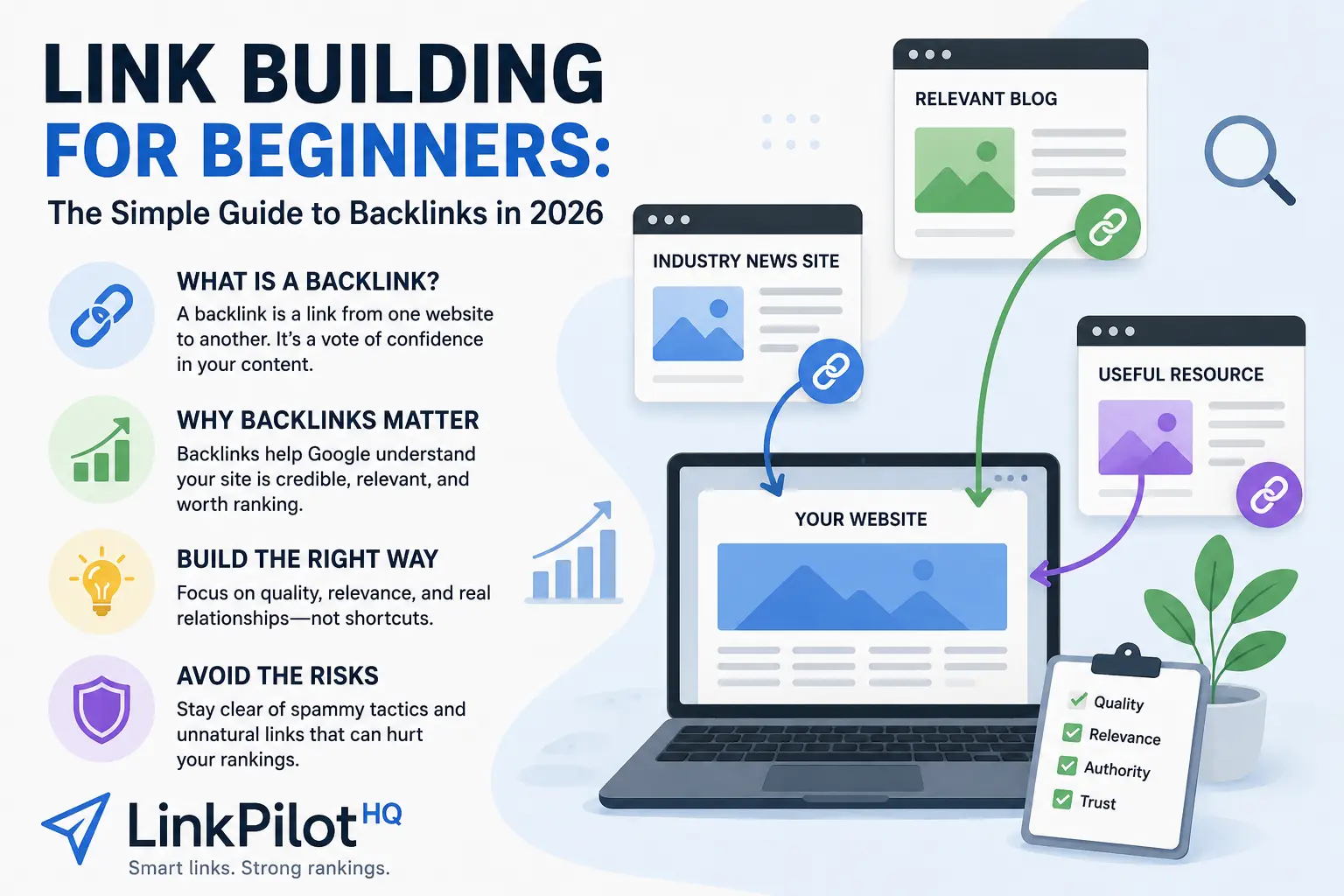
A backlink is simply a hyperlink from one website to another. When Site A links to your site, that’s a backlink. From Google’s perspective, it’s a vote of confidence. The more credible sites that link to yours, the more Google trusts that your content is worth ranking.
Not all votes carry the same weight, though. A link from a well-established, relevant website in your industry is worth far more than a link from a new blog with no traffic. Think of it like professional references — a recommendation from someone respected in your field means more than a glowing review from a stranger.
Why do backlinks still matter so much?
Google has hundreds of ranking signals, but backlinks have remained one of the most reliable indicators of quality since the beginning. The logic holds: if lots of credible people are pointing to your content, it’s probably good. Competing sites with strong backlink profiles consistently outrank sites with thin link profiles, even when the content quality is similar.
In 2026, the emphasis has shifted toward quality and relevance rather than sheer volume. Ten genuinely relevant backlinks from respected sites in your niche will do more for your rankings than a hundred links from unrelated or low-quality sources.
The main ways to build backlinks
There are a few approaches that work consistently for new sites.
Guest posting is one of the most dependable. You write a useful article for another site in your niche and include a link back to your own. It takes time but builds real relationships and produces content that earns trust.
Digital PR involves creating something genuinely newsworthy — original data, a study, a strong opinion piece — and pitching it to journalists and editors. When it lands, the links tend to come from high-authority publications.
Broken link building is a slightly more tactical approach. You find pages in your niche that link to dead resources, create a replacement, and let the site owner know. It’s helpful to them and earns you a link in return.
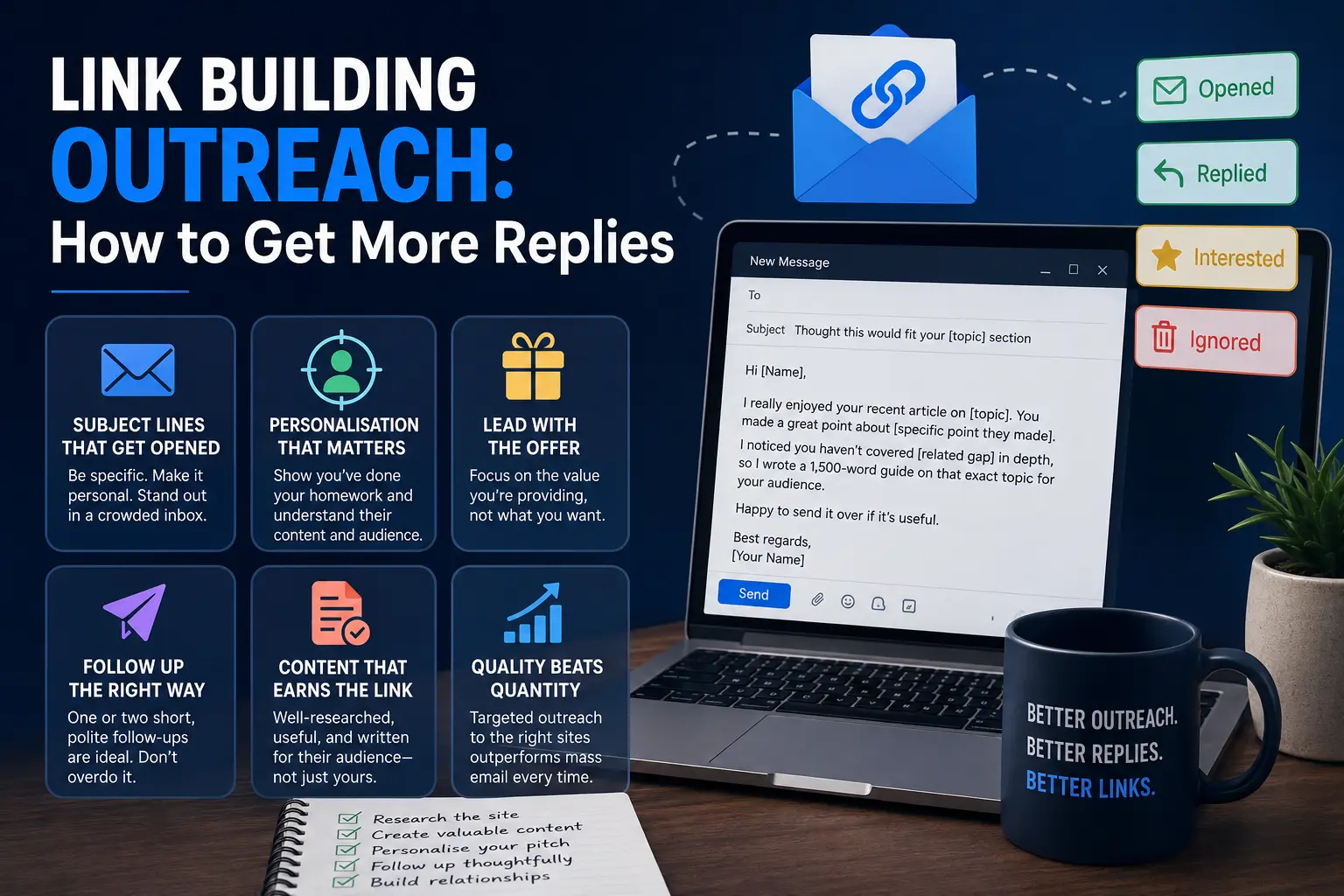
Resource pages are worth targeting too. Many sites maintain “best of” or “useful tools” pages in their niche. If your content genuinely belongs on a list like that, a polite, personalised email can get you there.
What to avoid
Buying links from link farms, using private blog networks, or mass-submitting your URL to directories are all tactics that worked years ago and now carry real risk. Google is considerably better at spotting unnatural link patterns than it used to be. A penalty can be hard to recover from, especially for a new site.
Stick to earning links through genuine content and real outreach. It’s slower but it compounds. The sites that built real link profiles in years past are still benefiting from them today.
Where to start
If you’re starting from zero, don’t panic about scale yet. Focus on two things: creating content worth linking to and building relationships with other sites in your space. Even five strong, relevant backlinks in your first few months will make a measurable difference to how Google views your site.
If you want expert help building a backlink profile from the ground up, LinkPilot HQ offers scalable, strategy-led link building for businesses at every stage.